When you get Ultherapy and come home, you find yourself looking in the mirror more often than usual.
“It looks like your jawline has lifted a bit, doesn't it?”
“There's still no real difference, did something go wrong?”
“Actually, your face looks a bit swollen today, doesn't it?”
You might think like this right after the procedure.
By the way, as for Ultherapy, This is not a procedure where the results are completed the moment you receive it. This is because the changes appear gradually as the skin recovers after ultrasound energy is delivered to the target depth and goes through a collagen remodeling process. Ultherapy's official materials also explain that while there may be initial changes, more distinct results appear over 2 to 3 months, and improvements can continue even after that.
Then, from when do you actually feel it changed?
Does the effect of Ultherapy show right after the procedure?
It's a bit ambiguous.
Some people feel that their facial contours are slightly more refined right after the procedure. On the other hand, some cases do not notice much of a change.
Ultherapy delivers micro-focused ultrasound energy to specific depths within the skin to induce the tissue's natural recovery and remodeling process. In other words, it is not structured so that all changes are completed the moment the procedure ends. Official materials also explain that results appear gradually as new collagen and elastin are produced.
So It is a bit early to judge whether the procedure was effective by looking in the mirror the next day..
Rather, in the beginning, the skin may feel slightly swollen or sensitive, so it might look different than usual. The official Ulthera instructions also state that redness, swelling, and pain are commonly reported reactions after the procedure.

Then when do you start to feel the effects of Ultherapy?
Although there are individual differences, Changes begin to appear gradually over the weeks, and it is realistic to view about two to three months as the main evaluation point..
According to official Ultherapy materials, gradual lifting appears during the first 2 to 3 months after the procedure, and visible improvements can last for up to 6 months.
Actual patient outcomes are presented in a similar manner. The official results page features cases at 60, 90, and 180 days post-procedure.
So after getting Ultherapy
Week 1 → I still don't know
1 month → It seems a little different
2~3 months → The changes become a bit more obvious.
It is easy to understand if you think of it to that extent.
Of course, this timetable does not apply equally to everyone.
Why does Ultherapy show more improvement over time?
The core lies in the process by which the skin reacts.
Ultherapy delivers ultrasonic energy to the desired depth to create thermal coagulation points, and then induces the tissue recovery process.
Initially, an inflammatory response and recovery process following thermal stimulation occur first, followed by fibroblast activity and collagen remodeling processes. Over time, the rearrangement of existing collagen and the formation of new collagen follow, causing the skin to gradually change in the direction of becoming firmer.
So Ulthera is “It is a bit different from lifting treatments that are ”done today and complete tomorrow.".
This is why you look for changes weeks and months after the procedure rather than just the facial line immediately following it.

Ultherapy at 1 month, but you don't look much different?
This question is bound to come up a lot in reality.
Especially if you received Ultherapy for the first time, it is easy to have high expectations due to the before-and-after photos you see on the internet.
However, it is rare for the most dramatic difference in before-and-after photos to appear the day after the procedure. Official patient outcome data also shows results at set intervals, such as 60 days, 90 days, and 180 days.
Therefore, You do not need to conclude that it had no effect right away just because there are no major changes in the first month.
Especially with procedures where the face changes naturally, people who look in the mirror every day may find it difficult to notice the change.
In cases like this, it is more helpful to compare it with a photo taken before the procedure under the same lighting and from the same angle.
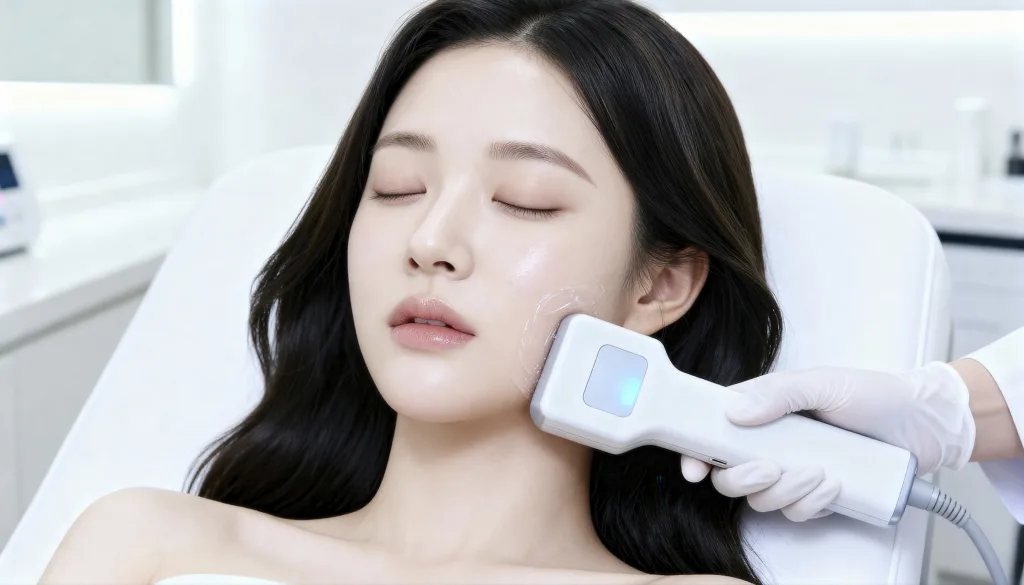
Why Ultherapy effects appear differently for each person
Even with the same Ultherapy treatment, the degree of change is not the same.
This is because the facial bone structure, amount of fat, skin thickness, location of sagging, and existing elasticity status are all different.
For example, a person whose main concern is sagging under the chin and a person whose main concern is cheek sagging may experience the results in different areas, even if they receive the same number of shots.
Also this time, what I wrote earlier Ultherapy 300 shots and 600 shots As explained in the article, the results of the procedure cannot be judged solely by the number of shots.
Even with the same 300 shots, the treatment range and purpose can vary depending on which area they are applied to and at what depth.
Ultherapy Prime features the ability to create a treatment plan while checking the condition of the skin and tissue using real-time ultrasound imaging.
Ultimately How many shots you received and when the effects appear are separate issuesIt is better to view it that way.
Does the effect of Ultherapy end after 3 months?
That is not the case.
2 to 3 months is the key point when results really start becoming noticeable, which doesn't mean the effect wears off then.
According to Ultherapy's official materials, visible improvements It can last for up to 6 months.And explain.
Also, the official patient outcome data presents results at 180 days as well as at 90 days.
Therefore, if you have checked the results around 3 months,
“Now it’s not going to change anymore.”
Rather than thinking that Observing the changes that have appeared so far along with the subsequent progressThis is good.
Conversely, if your face looks significantly different right after the procedure?
This case also needs to be viewed a bit calmly.
The feeling that your skin has become tight immediately after the Ultherapy procedure and the changes resulting from long-term collagen remodeling are distinct processes.
It is difficult to predict the final outcome based solely on the pulling or tightness felt immediately after the procedure, and conversely, a weak initial response does not mean there will be no final result.
In other words You shouldn't judge the feeling of the first few days and the results of a few months later by the same standards.

When is a good time to take before-and-after photos after Ultherapy?
Personally, I think this part is quite important.
Because the changes from Ultherapy tend to happen gradually, if you check the mirror every day, it is actually easy to miss the difference.
If possible, it is recommended to take front and side photos under the same lighting before the procedure, and then compare them under similar conditions at about one, two, and three months later.
In fact, official Ultherapy result materials also show comparison photos at specific time points, such as 60 days, 90 days, and 180 days.
especially if you are concerned about contours like your jawline or double chin, rather than a front-facing photo Side and 45-degree angle photosIt may be more helpful to check for changes in.
What if there are no expected changes even after 3 months?
At that time, rather than simply thinking, “Is the effect just kicking in late?”, you need to check your condition once again.
Ultherapy is a procedure aimed at improving skin sagging and elasticity, but not all facial sagging is caused by the same reasons.
For example, depending on whether skin sagging is the primary issue, the volume change is significant, the fat distribution has shifted, or there are deeper structural changes than expected, the appropriate treatment may vary.
So Before concluding that Ultherapy was ineffective, it is necessary to first review what specific issue you initially aimed to improve when getting the procedure.This is good.
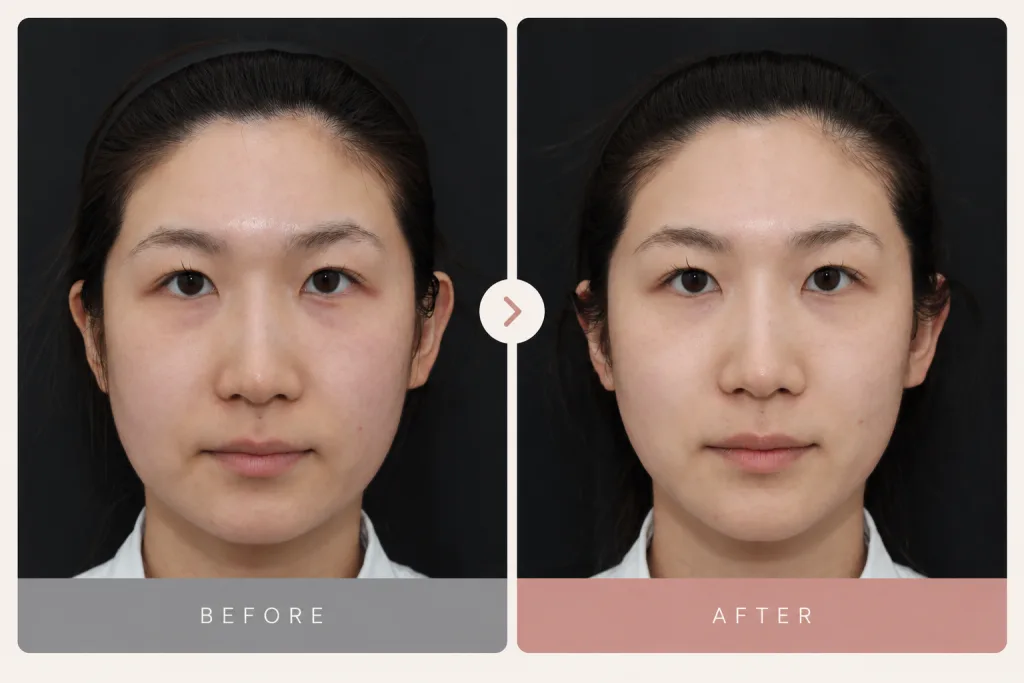
If you feel like the Ultherapy effects are fading away too quickly?
At first, it might have seemed like your jawline was defined, but after a few months, it might feel like it has gone back to the way it was.
This also cannot be simply explained as just “the effect has worn off.”.
Skin aging continues regardless of medical procedures, and weight changes, lifestyle habits, and UV exposure can also affect facial contours.
Also, if you strongly remember the changes right after the procedure, you might feel that “the effect has worn off” as the changes naturally become more gradual over time.
So, even when considering the maintenance period Instead of trying to pinpoint a specific day when the effects completely wear off, look at how your current skin condition differs compared to before the procedure.This is realistic.
The most important thing to watch out for while waiting for the Ultherapy results
You should carefully decide whether to continue with additional lifting too early just because the effects are not yet sufficiently visible.
Because Ultherapy is a procedure that requires time for collagen remodeling, judging the results before observing sufficient progress may lead to changing the treatment plan before the actual changes are complete.
Especially if you are planning other ultrasound or high-frequency procedures together, you must make a decision by considering the depth, scope, and timing of the previous procedure.
So before the procedure “Asking in advance when the results should be evaluatedThis is quite important.

When on earth should I check the Ulthera results?
To put it most realistically, it is like this.
Right after the treatment is the stage for checking the initial response, you may begin to notice gradual changes from around one month, and the results often become clearer at around two to three months. After that, the skin continues its remodeling process, and improvement may continue for up to six months.
However, since skin condition and treatment area differ from person to person, the same degree of change does not appear on the same day for everyone.
So rather than looking in the mirror right after Ulthera and
asking yourself, “Is it working or not?”
to judge the outcome,
comparing with your pre-treatment photos and checking the changes over several weeks to monthsis far more accurate.
And if there is still a large gap between the change you expected and your actual condition after two to three months, rather than simply increasing the number of shots, what problem you originally set out to treat on your faceis worth reviewing again.
Rather than an instant change that ends with a single session, Ulthera is closer to a lifting treatment whose results are assessed over the time the skin takes to remodel itself. Official materials also describe gradual results after a single treatment and note that the degree and duration of results vary from person to person.
※ The timing and degree of Ultherapy Prime results may vary depending on skin condition, treatment area, energy settings and treatment scope. Progress after treatment and the need for additional treatment should be assessed through a consultation with a physician.