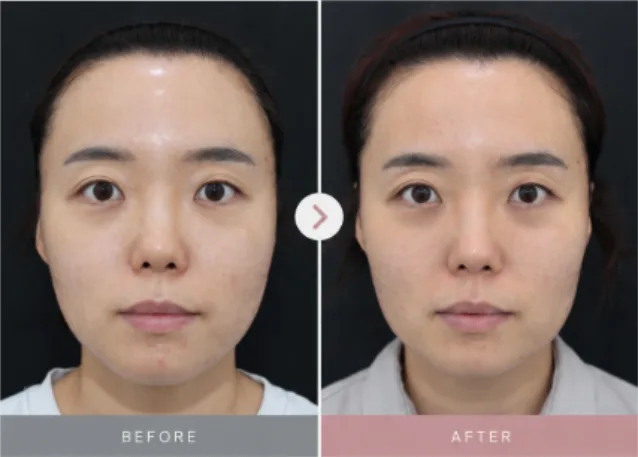
“I got a lifting procedure, and my face looks even more sunken.”
During Softwave consultations, some people have this worry.
especially if you didn't have much fat on your face to begin with, just the change in the shadows on your cheeks after your jawline is defined “Could it be that my cheeks have sunken in?” You might think that.
Conversely, since there are cases where people actually feel that their facial volume has decreased, simply brushing it off as fine is also not accurate.
What is important here is ‘distinguishing between 'looking like the cheeks are sunken' and 'the fat or tissue in the cheeks actually being reduced'.
Why might my cheeks look sunken after getting Sofwave?
Just because your face looks different after a procedure doesn't immediately mean fat reduction.
Immediately after the procedure, swelling or a feeling of heat may occur, and as facial edema subsides during the recovery process, the facial contours may actually appear more defined than before.
Especially if both cheeks look equally slightly slimmer, or if the jawline is defined and the center of the cheeks or front cheekbones appear relatively more prominent, the possibility of feeling ‘hollowed out' due to changes in facial shadows and contours rather than an actual loss of volumeCan also be considered.
Therefore, comparing it with the same lighting and angle as the pre-procedure photo is more important than you might think.
Sofwave is not a fat reduction procedure.
Sofwave works differently than devices aimed at melting fat.
Sofwave's official indications are the improvement of facial lines and wrinkles, eyebrow lifting, and lifting of lax tissue under the chin and on the neck; it is not a device approved for the purpose of fat reduction or body contouring.
Also, a recent histological study analyzing Sofwave's parallel ultrasound technology showed that thermal damage limited to the dermisIt was confirmed that this occurred, and subsequently, a gradual pattern of collagen and elastin reconstruction was observed.
Looking only at these functional characteristics, it is far from a treatment that directly reduces subcutaneous fat in terms of general principles.
Even so, right here “Sofwave cannot cause cheek volume loss under any circumstances.”It is also not right to conclude that.
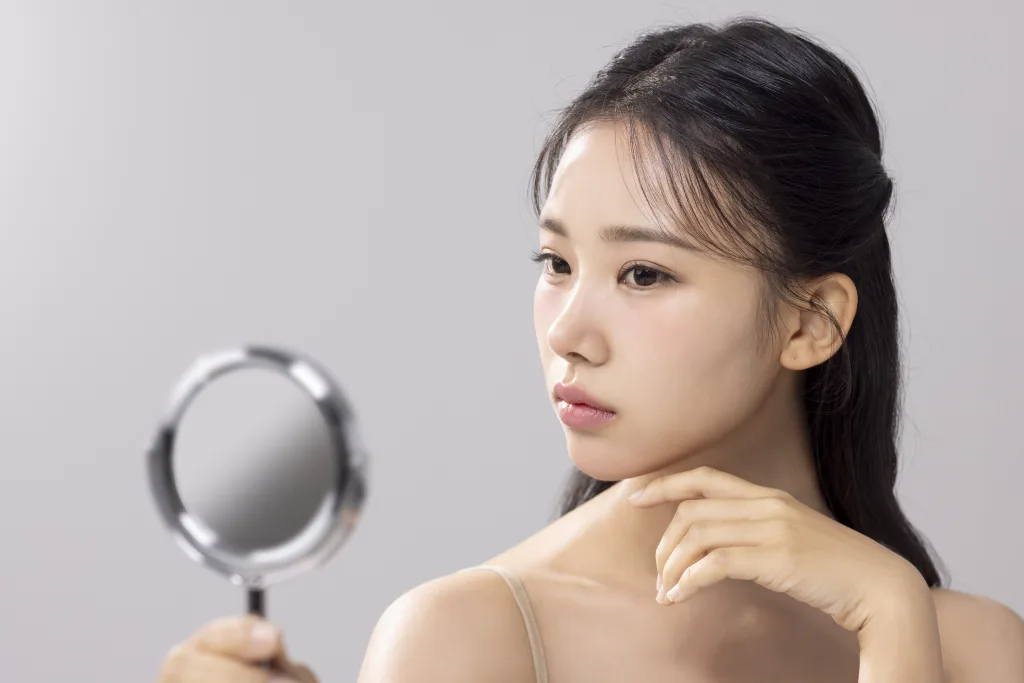
However, why are there actually people who complain about volume loss?
We need to take a closer look here.
The FDA's medical device adverse event database, MAUDE, contains reports of patients complaining of facial fat loss or tissue atrophy after Sofwave treatments. However, the data itself lacks sufficient patient-specific information and procedural conditions, It could not be determined whether the equipment was the cause.It is clearly stated.
In other words,
“There are reports of sunken cheeks.”
and
“It has been proven that Sofwave reduces cheek fat.”
is a completely different story.
Based on the clinical evidence published so far, Sofwave cannot be considered a general facial fat reduction procedure. At the same time, if there were actual facial changes after the procedure, rather than concluding unconditionally that it is unrelated to the device, A process to check the condition before and after the procedure is required.
It is important to distinguish and look at these aspects.
How does looking like you have sunken cheeks differ from actual volume loss?
In the clinic, we don't just listen to the word ‘cheek hollowing" and make a judgment.
Look at the face from multiple directions and check the location of the changes by comparing it with the pre-procedure photos.
For example
Did the entire ball shrink uniformly?
Is it sunken in only in a specific area?
Whether the shadow under my cheekbones has gotten darker
Did the original facial contours reveal themselves as the swelling went down?
Look at them separately.
Especially if you have lost weight in a short period, or if you have recently received other lifting, laser, or injection procedures together, it becomes difficult to conclude that Sofwave alone is the cause.
Because facial volume is not determined by just one procedure.
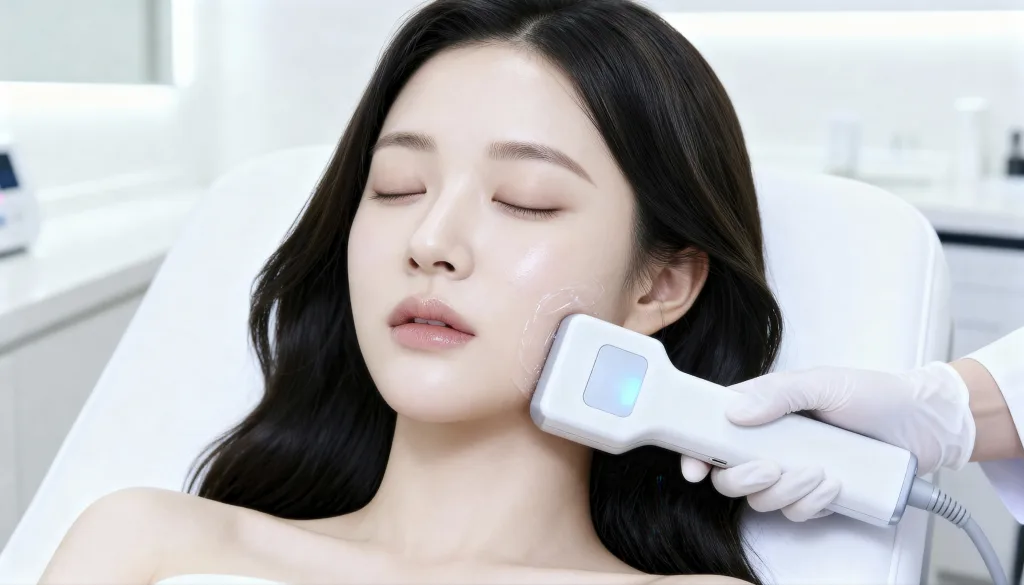
Is the depth of Sofwave related to volume loss?
One of the representative features of Sofwave is The point that it delivers energy centered on the dermis layer.
Official data describes the device as delivering energy to a depth of approximately 1 to 2 mm, and existing clinical studies have also evaluated skin elasticity and wrinkle changes at a depth of 1.5 mm.
In addition, in actual clinical studies, the depression volume of nasolabial folds and marionette lines significantly improved at 1 and 3 months post-procedure, and no related adverse events were reported in the study.
However, a recent study of 42 Asians observed a tendency for a decrease in jawline and submental volume by an average of 1.04±3.49 mL, but it was not statistically significant (p=0.06), and no adverse events other than temporary erythema and edema were reported.
This result as well This should not be interpreted as evidence that Sofwave reduces cheek fat. Rather, it is closer to data showing that when evaluating energy-based lifting, one must look at the anatomical location and the treatment design together.

Can people with no facial fat also get Sofwave?
This is quite a realistic concern.
“I don’t have much fat in my cheeks, so I’m worried that getting the wrong type of lifting procedure might make me look older.”
People like this, rather than the names of the equipment, Evaluating both the current facial volume and skin elasticity status together.
Since the face naturally has little fat to begin with, if skin elasticity is also declining, simply increasing the lifting intensity does not always lead to good results.
Conversely, if the face has sufficient volume but the skin has become thin and has many fine lines, it can be approached with the goal of improving the elasticity of the skin itself.
Ultimately, this is not an issue to be judged dichotomously, such as “no cheek fat, so Sofwave is banned” or “Sofwave is 100% safe.”.
If you are trying to decide between Sofwave and Ultherapy, you need to be even more careful.
Previously written Sofwave vs Ultherapy As explained in the post, both devices use ultrasound, but their energy delivery methods and primary targets are different.
Sofwave aims to improve wrinkles and elasticity mainly focusing on the dermal layer, while Ultherapy Prime delivers micro-focused ultrasound to multiple depths, allowing for the simultaneous evaluation of sagging in the skin and deeper tissues.
Therefore, if you already have a face where volume loss is a concern,
“Which piece of equipment is stronger?”
see
“Which layer should be treated on my face?”
It is better to think about first.
This is because when choosing a lifting procedure, the depth, energy settings, and treatment area must be determined by considering the facial anatomical structure and skin condition.

If your cheeks look sunken after Sofwave, when should you check with the hospital?
There is no need to judge the results too quickly just because your face looks a little different right after the procedure.
But over time
- or one cheek is noticeably sunken
- or if changes in a specific area continue to worsen
- Along with a feeling of thinned skin, your facial contours become more pronounced, or
- If other symptoms such as pain or paresthesia are accompanied
Instead of just looking at photos and waiting, it is recommended to have your condition checked at the medical institution where you received the procedure.
Especially If you have photos that can be compared with before the procedure, It is quite helpful during consultations.
In current Sofwave clinical studies, temporary erythema and edema are sometimes observed, but these common recovery responses must be evaluated separately from actual tissue changes.
After all, if you are worried about volume loss from Sofwave
Looking at the official mechanism of action and clinical evidence of Sofwave This is not a device intended to directly reduce subcutaneous fat. The core concept is to create thermal stimulation centered around the dermis and reconstruct the skin's collagen and elastic structure.
However, we shouldn't lightly dismiss the complaint that the face looks sunken after the procedure.
In reality, everyone has different skin thickness, fat volume, bone structure, and degree of sagging, so even with the exact same procedure, the visible changes can vary.
So when considering Sofwave, “Rather than the simple question of ”Will cheek hollowing occur or not?", where and at what depth on my face lifting is neededIt is more realistic to check.
Especially if you have naturally low facial volume or have experienced concerns about volume changes after previous lifting procedures, it is recommended that you thoroughly share your current facial state with your medical provider and consult on the treatment scope and energy settings before the procedure.
Sofwave is not a treatment that is applied in the same way to everyone, but rather Lifting that must be approached by looking at skin thickness, sagging, and facial volume structure together.It is close to.
※ Changes in facial contours after Sofwave treatment may vary depending on individual skin, fat, and skeletal conditions, as well as the treatment area and method. If unexpected changes persist or worsen after the procedure, please consult the medical institution where you received the treatment.