When you look into lifting procedures, you hit a wall right about here.
Softwave and Ultherapy are both said to be great, but what on earth is the difference?
If you search for it, there are many explanations saying “Ultherapy is for deep lifting” and “Sofwave is for fine wrinkles.” However, real faces are not divided that neatly.
The jawline may be sagging while the skin is thin with many fine wrinkles, or the facial contour may not be significantly sagging while the skin hangs loosely and appears to have lost elasticity.
So, when I get asked in the clinic, “Which of the two is better?”, rather than comparing the names of the equipment first, What is the first problem that needs to be solved on your face right nowSee.
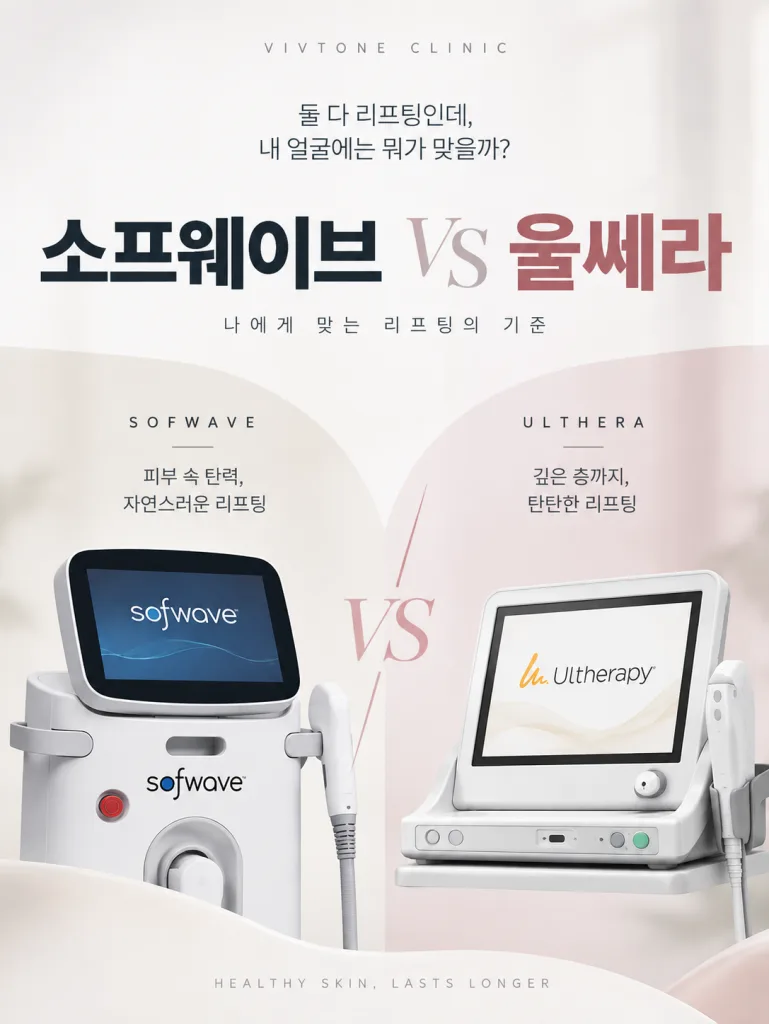
Are Sofwave and Ultherapy the same ultrasound lifting?
In a broad category, both are lifting devices that use ultrasonic energy.
However, the method of delivering energy and the main target depth are different.
Sofwave uses SUPERB™ technology to deliver seven parallel ultrasound beams, creating thermal stimulation in the dermis centered at a depth of about 1.5mm beneath the skin. Official domestic Sofwave materials also describe it as a medical device that helps improve facial wrinkles by delivering energy to a depth of 1.5mm.
On the other hand, Ultherapy Prime can create thermal coagulation points at different depths of 1.5mm, 3.0mm, and 4.5mm using micro-focused ultrasound with visualization (MFU-V). At 4.5mm, it can target deep tissues including the SMAS layer, and a key feature is that depths are selected while verifying subdermal structures through real-time imaging.
To put it simply,
Sofwave focuses more on skin elasticity and wrinkles, whereas Ultherapy focuses on addressing sagging from the skin down to the deep supporting tissues.
However, in actual procedures, since the 1.5mm zones of the two devices partially overlap, simply concluding your choice with “Sofwave is shallow and Ulthera is deep” is not enough.
Is sagging skin always an indication for Ultherapy?
Not necessarily.
This question comes up quite often during consultations.
“Do you think I need Ultherapy because my face looks like it's sagging these days?”
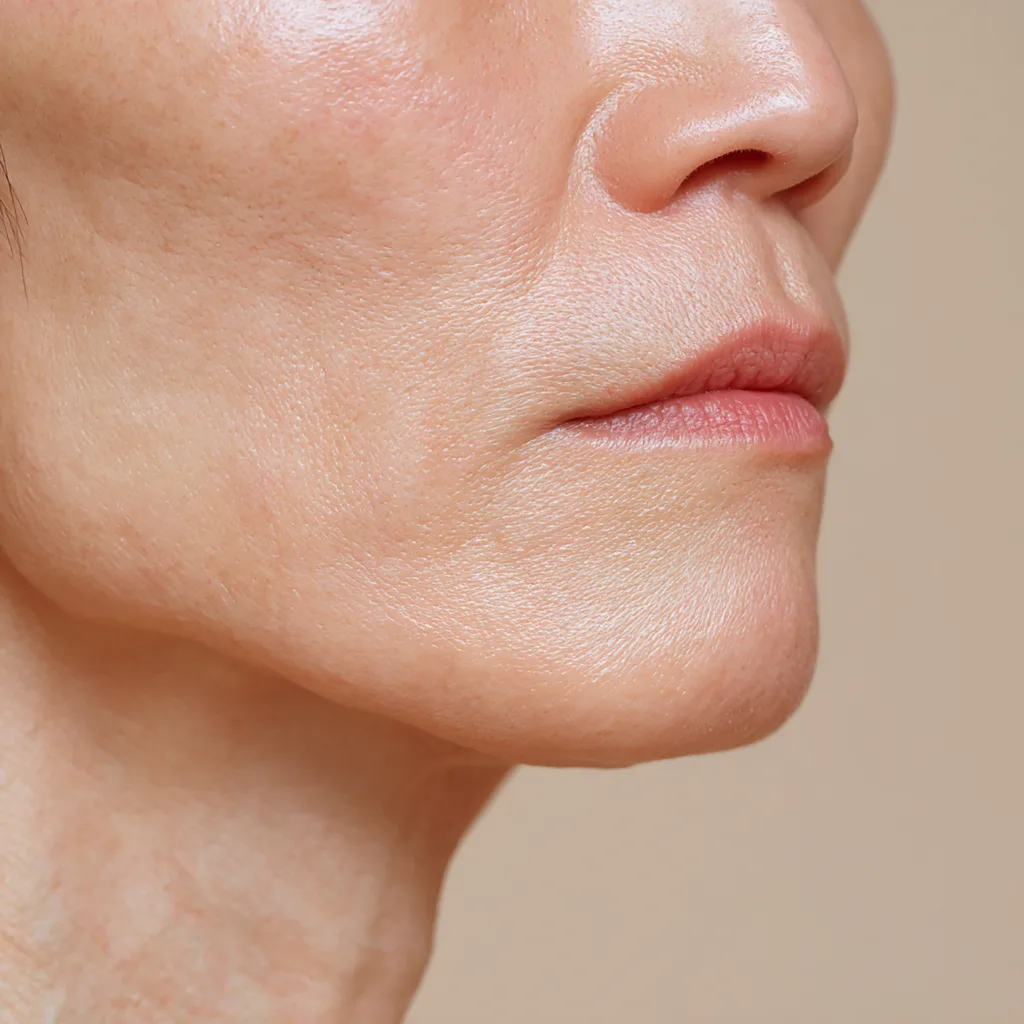
However, if you look closely at the face, it's not that the jawline itself has collapsed. When the skin becomes thin and loses elasticity, causing the face to appear generally blurredThere is.
In cases like this, simply stimulating the deep tissues does not necessarily increase satisfaction.
Conversely, if the lower cheeks look heavier when looking straight into the mirror and the jawline has dropped compared to before, or if skin sagging is noticeable from the side profile, it is necessary to examine the condition of the deeper tissues as well.
Ultherapy Prime has the advantage of being able to target different depths—1.5, 3.0, and 4.5 mm—depending on the condition of the skin and tissue.
In other words “Rather than following the formula ”face sagging equals Ultherapy," it's about first looking at which layer's changes are creating the current facial impression.That's right.
Conversely, if you are more concerned about skin elasticity and fine lines
You can consider Sofwave in situations like this.
What catches your eye in the mirror before your jawline when you wash your face after washing your face
- Gentle wrinkles on the cheeks
- Thinned skin
- My skin feels less firm than before.
- fine lines around the eyes or mouth
- The skin texture feels rough
than a deep sag decrease in skin's elasticity itselfmay be a more important issue.
Sofwave delivers parallel ultrasound energy to the mid-dermis, centered at a depth of approximately 1.5 mm, aiming to improve wrinkles and skin elasticity. Clinical studies have also evaluated facial wrinkle improvement, and changes have been reported in lower facial wrinkles such as nasolabial folds and marionette lines.
Based on these characteristics, VIVTONE's existing Sofwave column also explains cases suitable for fine wrinkles and decreased skin elasticity.
Do Softwave and Ulthera differ in pain as well?
Pain is a question that is never left out when comparing the two procedures.
However, it is not good to simply distinguish them like “Sofwave doesn't hurt and Ultherapy hurts.”.
Sofwave may also cause a warm or stinging sensation while energy is being delivered, and Ultherapy can also produce varying levels of stimulation depending on the area, depth, and energy settings.
In particular, Ultherapy Prime features the ability to deliver energy to the required depth while checking the subsurface skin structure in real-time video. Actual pain is also affected by the treatment area, tissue thickness, and energy settings.
So rather than choosing equipment based on pain alone First, deciding on the desired effects and skin condition, and then taking into account the discomfort you are willing to endure.This is realistic.
“Isn't Ulthera more effective because it goes deeper?”
There are also many such questions.
By the way Just because it's deep doesn't necessarily mean it's better.
In treatment, it is important to deliver the required energy to the targeted layer.
For example, simply repeating treatments only on the deeper layers of a face that suffers from a loss of skin elasticity and fine wrinkles does not automatically solve the skin's surface concerns.
Conversely, if deep tissue sagging is evident and you only continue to manage the elasticity of the skin's surface, the face contour may not change as much as desired.
This is precisely why Ultherapy Prime can use multiple depths. Because skin and tissue thickness vary from person to person, the necessary layer must be selected.
Softwave is no exception either.
Since it is a device that focuses on a specific depth of approximately 1.5mm, whether skin problems of that depth match my concernsis important.

When it comes to nasolabial folds (smile lines), which is better, Sofwave or Ultherapy?
When it comes to nasolabial folds, it is particularly difficult to make a decision based solely on the name of the device.
The reason they look like they have a hard life loss of skin elasticity and surface wrinklescloser to, or sagging of the cheeks or changes in the midface structurebecause the approach may vary depending on which one is larger.
Sofwave can approach the treatment by improving dermal elasticity and wrinkles, whereas Ultherapy can evaluate sagging by including deeper layers. In fact, a Sofwave study also reported an improvement in the volume of nasolabial fold depressions.
So if you care about your destiny, rather than asking, “What is better for my destiny?” “Whether my nasolabial folds are due to large skin wrinkles or deepened by cheek sagging,”Checking that comes first.
This part is also covered in detail in a separately written Vivtone column.
→ Sofwave effect for nasolabial folds, does it help even with deeply visible nasolabial folds?
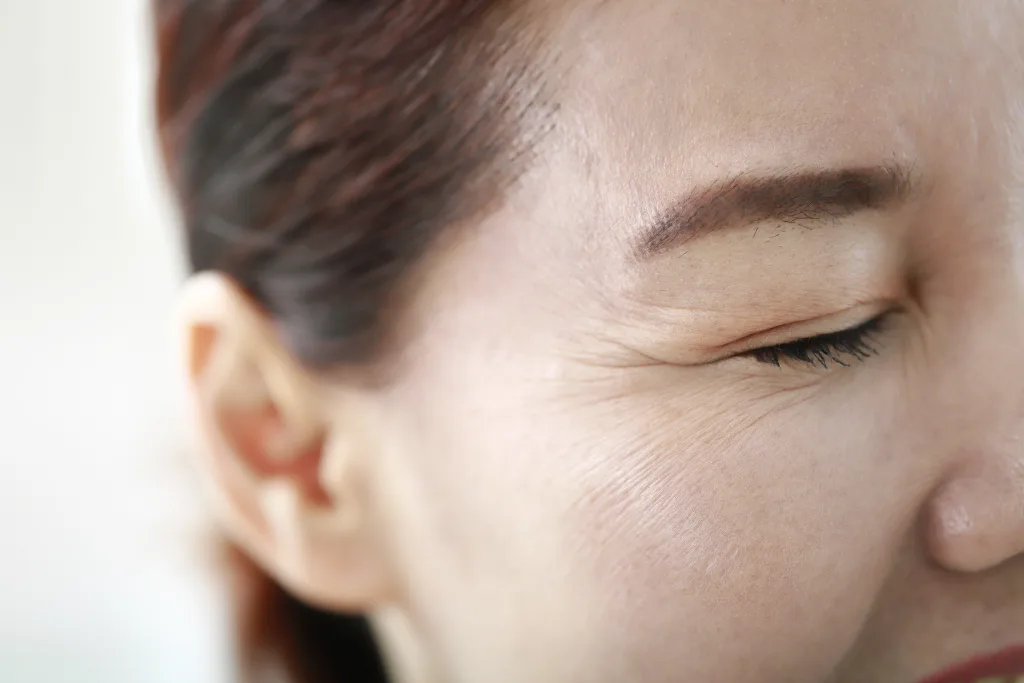
If you are concerned about the eye area or fine lines, the story changes a bit.
Some people feel that their entire face isn't sagging, but rather have a strong sense of increased fine lines around the eyes and cheeks, along with thinning skin.
In cases like this, rather than thinking only about a “strong lift” How to improve skin surface elasticity and textureneed to look at together.
Sofwave primarily targets the dermal layer, so it can be considered for these kinds of concerns.
On the other hand, if the overall facial contour is sagging and sagging of the lower cheeks and jawline is also visible, it may be more appropriate to consider equipment that allows for depth-specific approaches, such as Ultherapy Prime.
Should I choose between Sofwave and Ultherapy based on how long the results last?
A method frequently seen online is
How many months for Sofwave
How many years does Ulthera last?
It is a choice based solely on the maintenance period.
However, this is not used as a sole criterion in actual clinical practice either.
Changes maintained after the procedure can be influenced not only by the treatment depth, but also by skin condition, treatment design, energy settings, and lifestyle habits.
In fact, Ultherapy's official materials also emphasize the selection of the appropriate depth and individual differences in tissue, and Sofwave can also yield varying treatment results depending on the individual's skin condition.
Therefore, rather than looking for “longer-lasting equipment” What kind of changes suit my concernsIt is better to decide on that first.
Will getting both procedures together yield better results?
Even here, you shouldn't simply think that “doing both will double the effect.”.
Since the two devices have overlapping 1.5mm areas, it is not simply a matter of approaching it as overlapping the ultrasound twice. Whether to use them in combination and when to do so must be determined by assessing skin thickness, the location of sagging, and the state of previous procedures.
For some people, a single device may be enough, while others may consider treatments for different purposes sequentially.
Ultimately Rather than whether two pieces of equipment are used, it is whether the problems each piece of equipment must solve are clearly divided.is important.

So, which one should I choose between Sofwave and Ultherapy?
If I were to explain this in the counseling room, I would say it like this.
If your skin itself has become thinner and lost elasticity, making you concerned about fine lines, you can consider Sofwave first.
Conversely, if sagging of the facial contours, such as the lower cheeks or jawline, is pronounced and deeper tissue changes need to be considered together, Ultherapy Prime can be an option.
However, on an actual face, it is much more common for the two to exist simultaneously.
Therefore, deciding based solely on age or dividing it like “Ultherapy for people in their 40s and Sofwave for people in their 30s” is also not accurate.
The choice may vary depending on skin thickness, fat distribution, the location of sagging, the degree of fine wrinkles, and the desired changes.
If you are wondering how many times you should get Sofwave, when a single session is enough, and when to get it again, it is recommended to also check out the previous column.
→ How many times should I get Sofwave? When one session is enough and when to get it again
Ultimately, it's not a matter of choosing the better one between Sofwave and Ultherapy, First, figure out which change in your face is your biggest concern right now..
If skin elasticity and fine wrinkles are the main focus, Sofwave, which targets the dermal layer, can be an option, whereas if sagging facial contours and deep tissue changes are the main concern, Ultherapy Prime can be considered.
Although they are grouped together as ultrasound lifting, because the method of delivering energy and the target depth are different, “It is more accurate to base your decision on ”which layer of my skin needs treatment“ rather than ”which equipment is stronger.".
The suitability of Sofwave and Ultherapy Prime, treatment depths and energy settings, and whether they can be combined may vary depending on individual skin thickness, degree of sagging, and the treatment area. The actual treatment and method must be determined after a consultation with a medical professional.