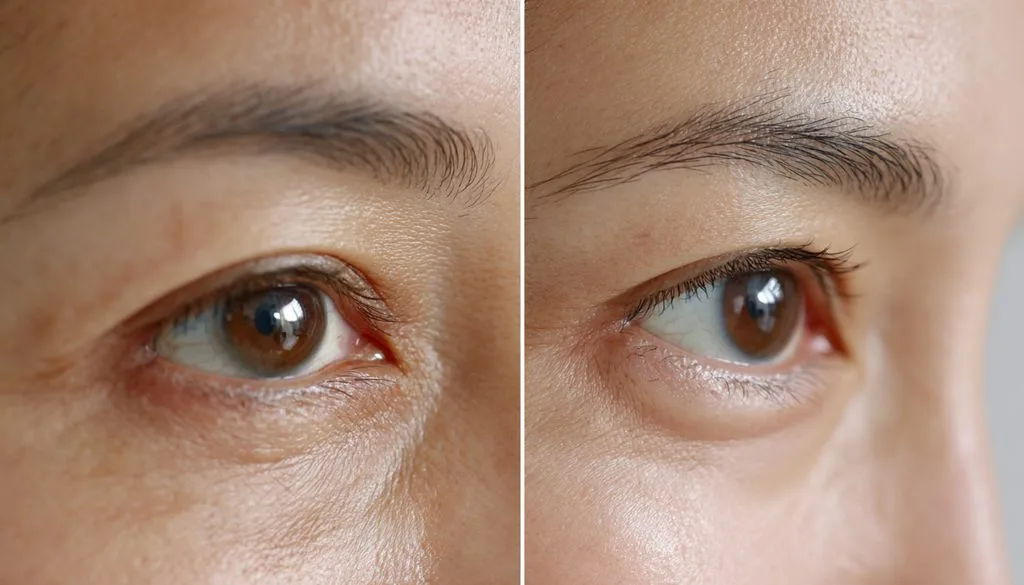
When considering Sofwave treatment, the first question is not how powerful the treatment is, but whether your current skin condition and desired improvements align with Sofwave’s characteristics.
Sofwave is a noninvasive treatment that uses ultrasound energy to deliver controlled heat to the dermis. It is used to improve facial lines and skin laxity and to lift lax tissue around the eyebrows, beneath the chin, and on the neck.
Which skin conditions are well suited to Sofwave, and when might another treatment be a better first choice? By reviewing how Sofwave works, its expected effects, discomfort, and recovery process, we will explore the factors that can help determine whether Sofwave is an appropriate treatment option for you .
What Is Sofwave?
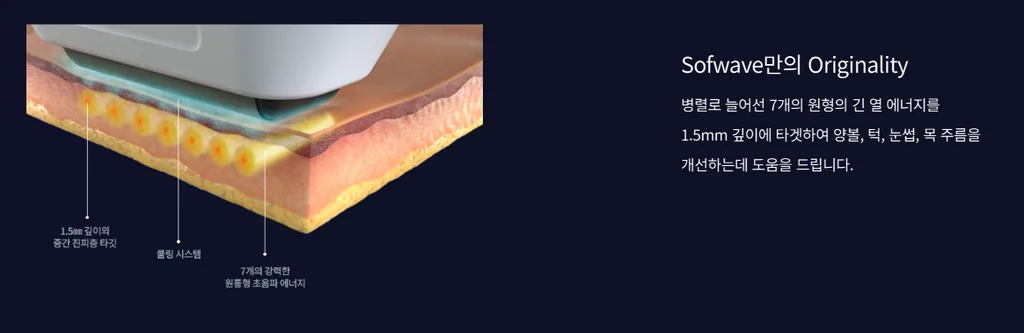
Sofwave is a noninvasive medical device that uses high-intensity, high-frequency ultrasound to deliver thermal stimulation to the dermis.
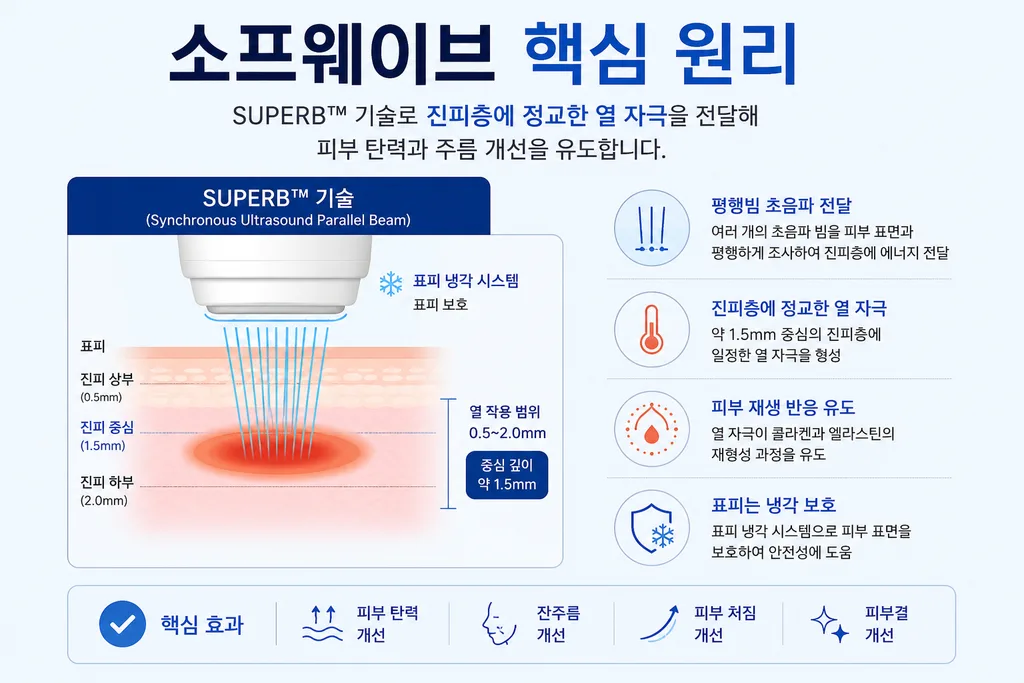
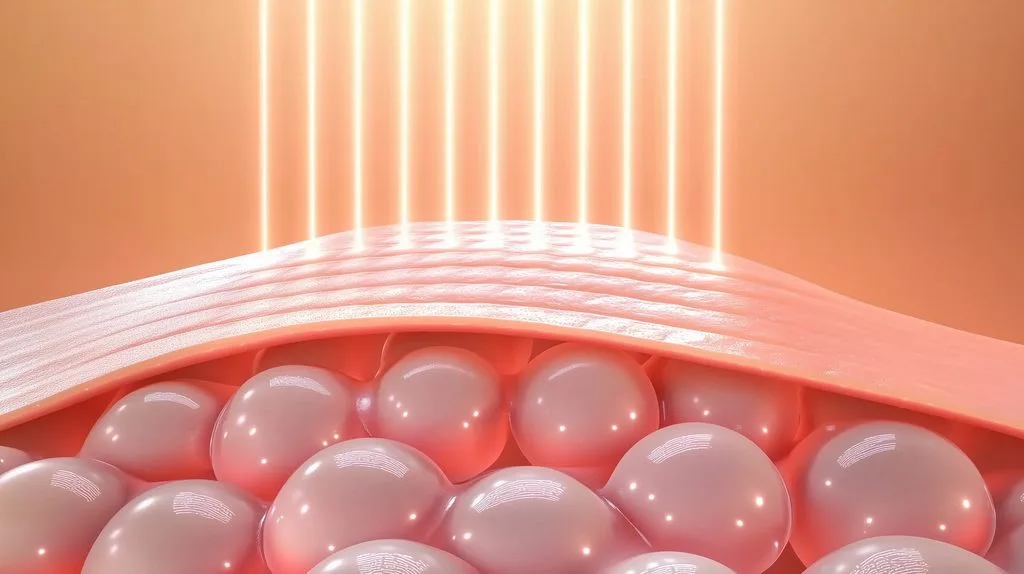
Its core technology is SUPERB™(Synchronous Ultrasound Parallel Beam),which delivers multiple ultrasound beams in a configuration parallel to the skin surface.
According to the manufacturer’s technical information,ultrasound-induced thermal effects are primarily created at depths of approximately 0.5–2 mm, with a central depth of about 1.5 mm. A cooling system is applied at the skin surface to help protect the epidermis.
Sofwave is therefore better understood as a treatment that delivers thermal stimulation to a specific depth within the dermis to promote skin remodeling, rather than as a device that directly targets.
What Is the Core Principle Behind Sofwave?
When thermal energy is delivered to the skin, it produces temporary heat stimulation and a corresponding tissue response.
Sofwave is designed to create controlled thermal stimulation in the dermis and promote remodeling of dermal structures, including collagen and elastic fibers.
Manufacturer materials describe a mechanism in which collagen and elastin undergo remodeling after thermal stimulation. Histologic assessments presented by the manufacturer have also reported increased dermal collagen and elastin after treatment.
However, it would not be accurate to interpret this as the immediate production of collagen.
Immediately after treatment, the tissue first responds to the thermal stimulation. Skin remodeling then progresses over time. Sofwave results should therefore be assessed by considering changes that develop after an appropriate interval, rather than relying only on the immediate sensation or appearance.
What Changes May Be Expected from Sofwave?
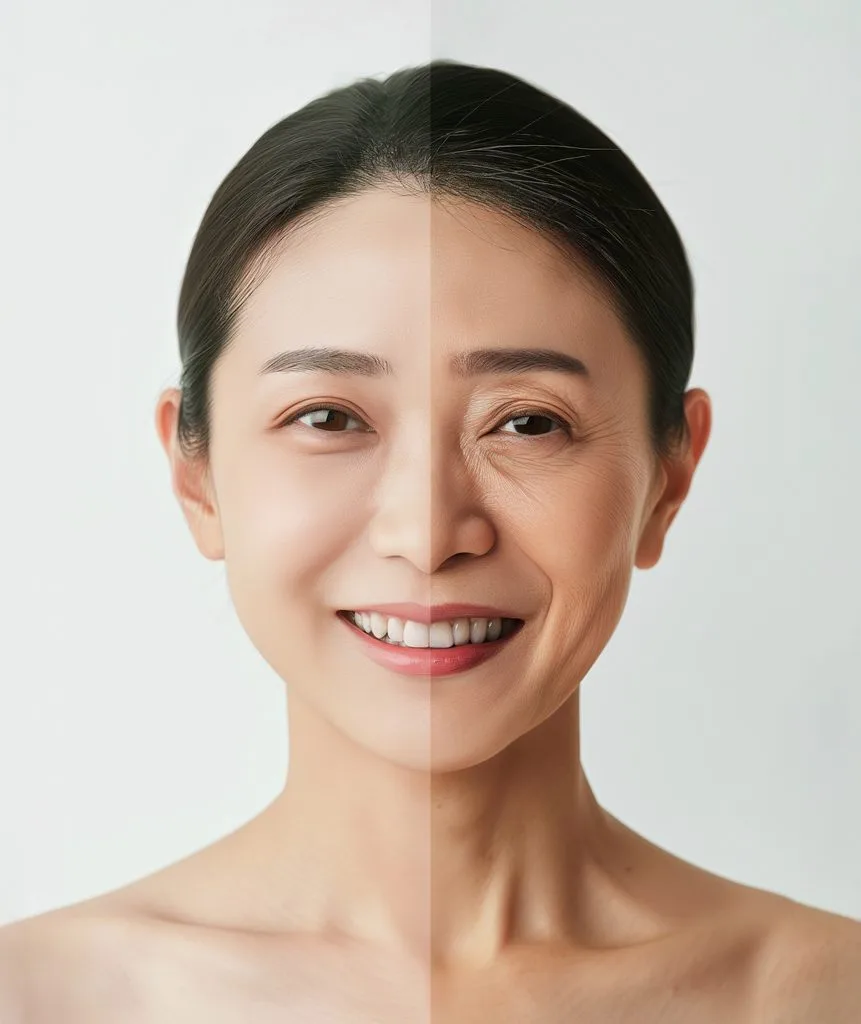
Sofwave may be used to target different concerns depending on the degree of skin laxity, the type of wrinkles, and the treatment area.
Key areas to consider include the following.
Skin Elasticity and Laxity
Collagen and elastic fibers in the dermis play an important role in maintaining skin structure and elasticity.
Because Sofwave delivers thermal stimulation to the dermis to promote tissue remodeling, it may be used to improve reduced skin elasticity and mild skin laxity.
The U.S. FDA-cleared indications for Sofwave include improving facial lines and wrinkles and lifting lax tissue around the eyebrows, beneath the chin, and on the neck.
Fine Lines and Surface Irregularities
Dermal structure and collagen condition are also associated with fine lines visible on the skin surface.
A clinical study evaluating the same high-intensity parallel-beam ultrasound technology used by Sofwave observed improvements in facial and neck lines. At the 12-week assessment, clinical improvement was identified in many participants.
Because it works differently from treatments that physically fill deep wrinkles, Sofwave is better understood as an approach intended to improve both skin elasticity and surface lines.
Skin Laxity Around the Eyebrows, Under the Chin, and on the Neck
Sofwave is not limited to treating overall facial skin texture.
Its FDA-cleared indications also include lifting lax tissue around the eyebrows, beneath the chin, and on the neck.
It may therefore be considered when reduced skin elasticity is the primary concern, such as mild laxity around the eyebrows, under the chin, or on the neck.
However, when skin laxity is severe or there are substantial changes in deeper structures such as subcutaneous fat, muscles, or retaining ligaments, a dermis-focused treatment alone may not provide sufficient improvement.
When Do Sofwave Results Begin to Appear?
Sofwave does not produce its full range of changes immediately after treatment.
Initially, the tissue responds to the thermal stimulation created by ultrasound energy. Gradual changes may then occur as dermal remodeling continues.
In a clinical trial evaluating Sofwave’s high-intensity parallel-beam ultrasound technology, changes in the lower face, including the nasolabial folds and marionette lines, were assessed at one and three monthsafter treatment. Some improvement was observed from the one-month assessment.
When evaluating Sofwave results, it is therefore more appropriate to observe how skin elasticity and wrinkles change over several weeks to monthsthan to focus on how much lifting is visible immediately after treatment.
The timing and degree of improvement may vary because skin thickness, loss of elasticity, wrinkle depth, treatment area, and energy settings differ among individuals.
Does Sofwave Deliver Energy Deep into the Skin?
This is one of the most important considerations when comparing Sofwave with other ultrasound lifting treatments.
Sofwave’s SUPERB technology is designed to deliver ultrasound energy to the mid-dermis, centered at approximately 1.5 mm. Manufacturer information describes a thermal treatment range of approximately 0.5–2 mm.
This means that Sofwave does not work in the same way as devices designed to target deeper tissue layers.
It is therefore inaccurate to assume that Sofwave delivers strong energy deep into the skin simply because it is an ultrasound-based lifting treatment.
Sofwave is characterized by concentrating thermal stimulation at a specific dermal depth while cooling the skin surface during energy delivery.

How Are Sofwave and Ultherapy Different?
Sofwave and Ultherapy both use ultrasound energy, but their methods of energy delivery and primary target depths are not the same.
Sofwave uses SUPERB technology to deliver parallel ultrasound beams to the mid-dermis, centered at approximately 1.5 mm. Microfocused ultrasound (MFU) devices, by contrast, create focal points at multiple depths to form thermal coagulation points in the skin and underlying tissue.
It is therefore not appropriate to compare the two devices solely in terms of which is stronger.
The appropriate approach depends on which tissue layer requires treatment and whether the main concern is fine lines, skin elasticity, or laxity beneath the chin or on the neck.
> Sofwave vs Ultherapy: Which Is Right for My Face?
> Ultherapy PRIME Pain: How Painful Is It? Causes and Pain Levels to Know
How Painful Is Sofwave?
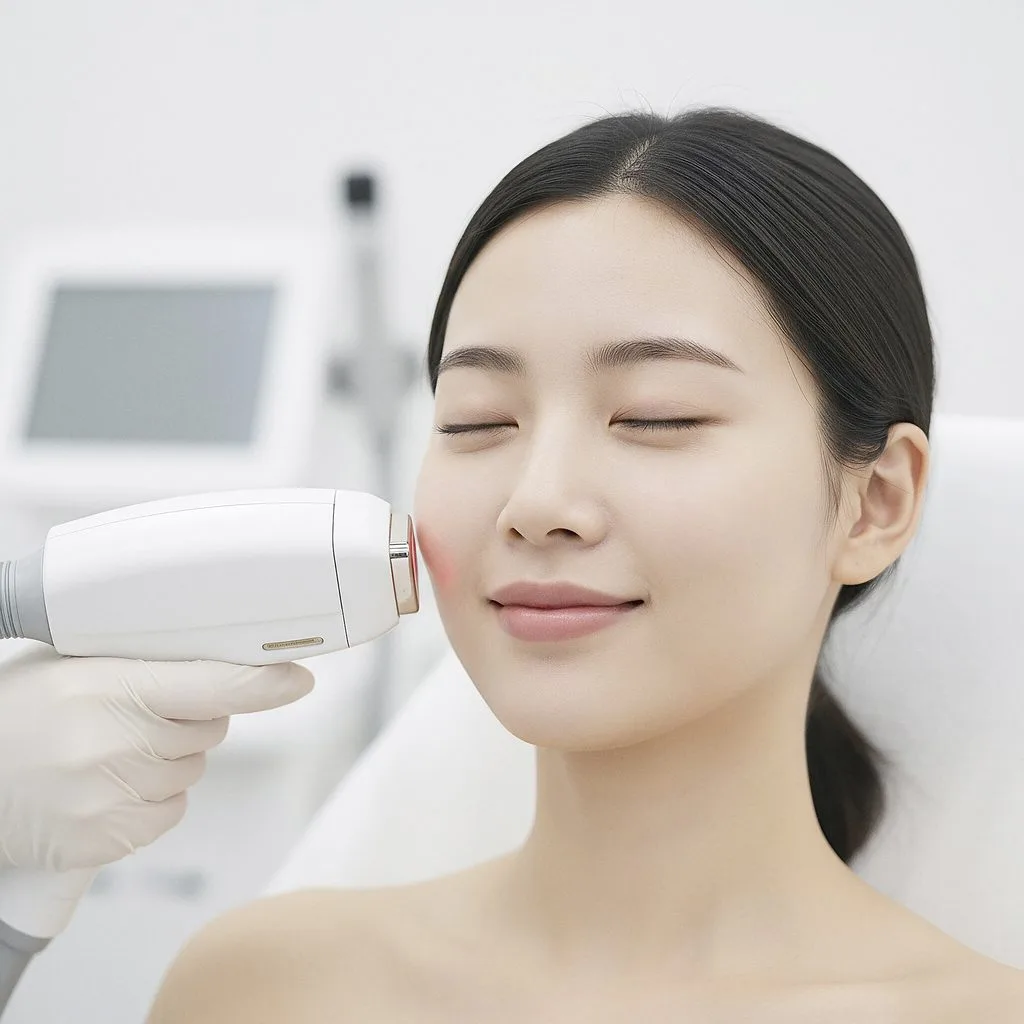
As ultrasound energy is delivered to the skin, patients may experience warmth, tingling, or brief pain.
Pain levels vary considerably among individuals and may also differ according to the facial area, skin thickness, and energy settings.
In clinical studies, one study reported a mean pain score in the 6-point range on a 0–10 scale immediately after high-intensity parallel-beam ultrasound treatment, while another reported an average score in the 5-point range.
Rather than claiming that Sofwave is completely painless or extremely painful for everyone, it is more accurate to understand it as a heat-based treatment whose discomfort can vary from person to person.
If discomfort becomes significant during treatment, inform the medical professional immediately and ask whether the energy level or treatment technique can be adjusted.
What Reactions May Occur After Sofwave?
Although Sofwave is noninvasive, ultrasound energy is delivered to the skin, so temporary redness, warmth, swelling, or tenderness may occur after treatment.
Most clinical studies did not observe serious adverse events, but as with any medical procedure, reactions may vary depending on the individual’s skin condition and treatment parameters.
Mild redness or warmth immediately after treatment does not necessarily indicate an abnormal reaction.
However, if pain progressively worsens or swelling and redness persist abnormally, contact the medical provider that performed the treatment.
When Sofwave May Be Worth Considering
When considering Sofwave, it is more important to assess he changes currently occurring in your skinthan to focus on a particular age for starting treatment.
Sofwave may be considered when skin elasticity has declined and fine lines or mild laxity have begun to appear, particularly for those seeking gradual improvement through a noninvasive approach rather than surgery. Recent literature also describes ultrasound-based noninvasive lifting as an option for skin tightening and texture improvement in patients with mild to moderate skin laxity.
- Reduced skin elasticity compared with before
- Fine lines have begun to become noticeable
- Mild skin laxity along the facial contours
- Laxity beneath the chin or on the neck
- Skin laxity around the eyebrows
If the main concern is facial volume loss or significant laxity involving deeper structures, a dermis-focused treatment such as Sofwave alone may not achieve the desired improvement.
When Sofwave May Not Be the First Treatment to Consider
If facial volume loss or deeper structural laxity is a greater concern than reduced skin elasticity itself, Sofwave alone may not provide the desired improvement.
Because Sofwave primarily delivers thermal stimulation to the dermis, its purpose differs from treatments that directly restore volume to hollow areas or physically correct laxity in deeper tissues. When volume loss is prominent, options such as fillers or fat grafting may need to be considered. When laxity is substantial, other energy-based procedures or surgical approaches may be more appropriate.
If skin laxity is severe or a dramatic change is expected within a short period, the condition of the skin and soft tissue should be assessed before selecting Sofwave alone. Its U.S. FDA-cleared indications are specifically defined, including the improvement of facial lines and wrinkles and lifting lax tissue around the eyebrows, beneath the chin, and on the neck. Sofwave should not be understood as a treatment that addresses every type of facial laxity in the same way.
In these cases, fillers, other energy-based procedures, injectable treatments, or surgical options should be compared according to the individual’s skin condition.
Skin Condition Matters More Than ‘Depth’ When Choosing Sofwave
Lifting treatments are often compared according to how many millimeters deep the energy reaches.
However, deeper treatment is not necessarily more suitable for every type of skin.
Skin aging involves changes not only in the epidermis and dermis but also in structures such as subcutaneous fat, retaining ligaments, and muscles. Even when the visible concern is described as sagging, the appropriate treatment may differ depending on its underlying cause.
Because Sofwave is designed to deliver thermal stimulation primarily to the dermis and promote skin remodeling, its characteristics may be considered when dermal changes such as reduced elasticity and fine lines are the main concerns .
Ultimately, rather than comparing devices by a single measure of effectiveness, it is important to assess current skin thickness and elasticity, wrinkle depth, and the degree and location of laxity, and then select a treatment that matches the intended goals.