When looking into lifting procedures for nasolabial folds, you end up looking into Sofwave at least once.
However, there is one confusing part here.
“Will Softwave actually make nasolabial folds lighter?”
The shape of nasolabial folds varies quite a bit from person to person. For some, the skin loses elasticity and the folds deepen like fine lines; for others, the cheeks sag, casting a long shadow toward the corners of the mouth. In some cases, the wrinkles appear even more prominent as the skin thins or volume decreases.
Therefore, just because you have nasolabial folds does not mean they can all be approached in the same way.
To properly understand the Sofwave nasolabial fold effects First, let's see what kind of smile lines I haveIt is recommended to start viewing from.
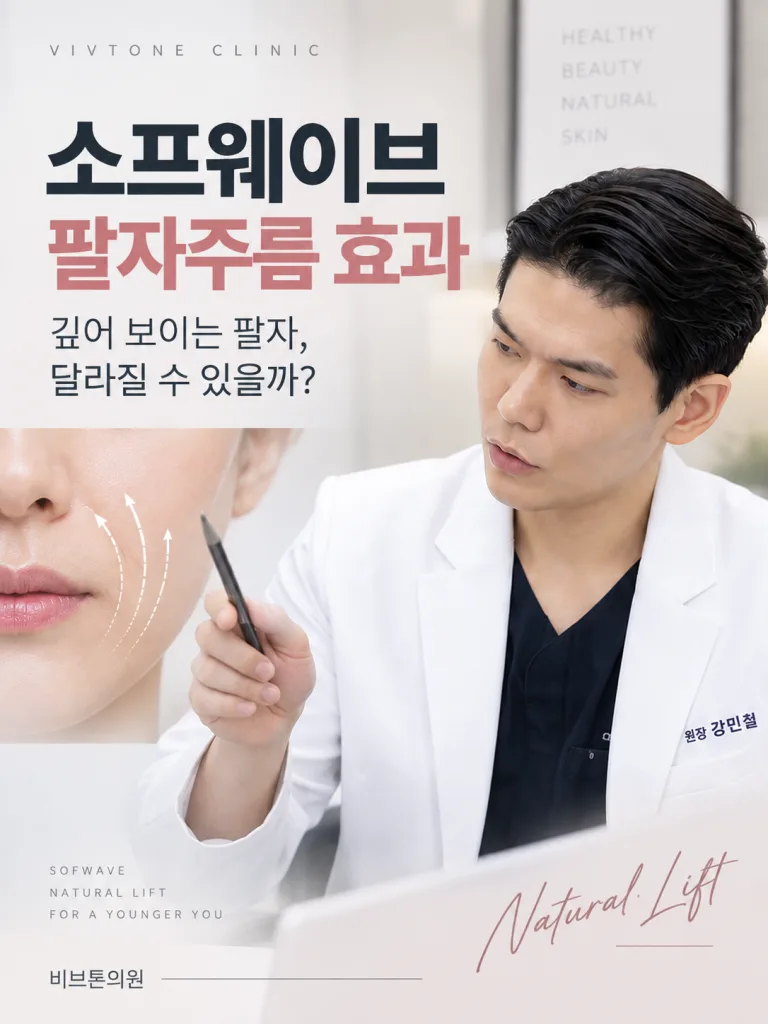
Just because your nasolabial folds are deep doesn't necessarily mean you need Sofwave.
It is difficult to think of nasolabial folds as simply a single line formed on the skin's surface.
As skin loses its elasticity, folds can become deeper, and as the tissue around the cheeks shifts downward, the grooves can become more pronounced. Changes in facial volume and anatomical structure can also affect the visibility of nasolabial folds.
The reason it is important to distinguish this difference is that Sofwave is mainly A method that delivers ultrasonic energy to the dermis layer to induce collagen remodeling and improve skin elasticityThis is because, while the current FDA-approved indications include the improvement of facial lines and wrinkles, it is not a procedure that directly fills in deep structural sagging or lost volume.
Therefore, it is difficult to consider Sofwave as the absolute right answer just because nasolabial folds are visible.
How Sofwave works on nasolabial folds
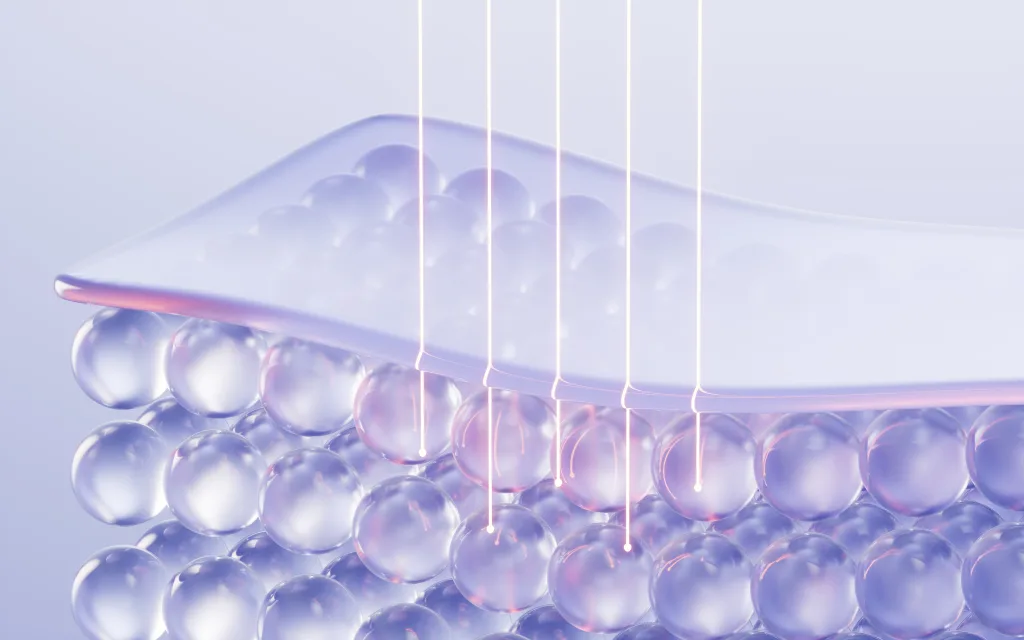
Sofwave delivers energy in a slightly different way than typical focused ultrasound.
Approximately using SUPERB™ technology Deliver an ultrasound beam parallel to the dermis, centered at 1.5mmand creates thermal stimulation in the target area to induce the skin remodeling process. Previous Vivtone columns also explain that Sofwave delivers thermal stimulation to a specific depth of the dermis, after which the remodeling of collagen and elastic fibers takes place.
Because of these characteristics, even in the nasolabial folds When both a decrease in skin elasticity itself and surface wrinkles are visibleYou can consider Sofwave for this.
However, it is not a method of directly filling the deep structure of the nasolabial folds or pulling up sagging tissue like surgery.
In other words, When the skin loses elasticity and the nasolabial folds deepenand If the nasolabial folds have become prominent due to volume loss or changes in deeper tissuesYou shouldn't think about it the same way.
Were nasolabial fold changes observed in actual studies?
This part is quite important.
A 2023 study published in the Journal of Cosmetic Dermatology observed changes in nasolabial folds and marionette lines on the lower face after delivering high-intensity parallel-beam ultrasound at a depth of 1.5 mm to 36 subjects.
Compared to before the procedure, the study A significant decrease in the depression volume of nasolabial folds was observed at 1 and 3 months.and improvements were observed in participants with 60% or more starting from the 1-month mark.
What is important here is The point is that the nasolabial folds do not disappear immediately after getting Sofwave..
The studies also evaluated changes over periods of 1 and 3 months. This can be understood to mean that rather than judging the final effect solely by the tight sensation or skin surface changes immediately after the procedure, one should look at the subsequent process of skin transformation together.
By the way, why do some people see an improvement in their smile lines, while others see hardly any difference?
This is because nasolabial folds do not have just one cause.
For example, when looking in the mirror, rather than the nasolabial folds themselves sagging skin on the lower cheeks that creates shadowsJust using the Softwave for ramen might not make as much of a difference as you expect.
Conversely, if your skin is thinning and losing elasticity, leaving shallow wrinkles even when you are not smiling, an approach that improves the elasticity of the skin itself is likely to be a better fit.
Because of this, in the clinic, we examine not just the depth of the nasolabial folds, but also whether the lines are visible even normally, whether they deepen only when smiling, whether cheek sagging is present, whether the skin itself is thin and has lost elasticity, and whether volume loss is also involved.
Even for the same nasolabial folds, the choice of procedure may vary depending on the cause.
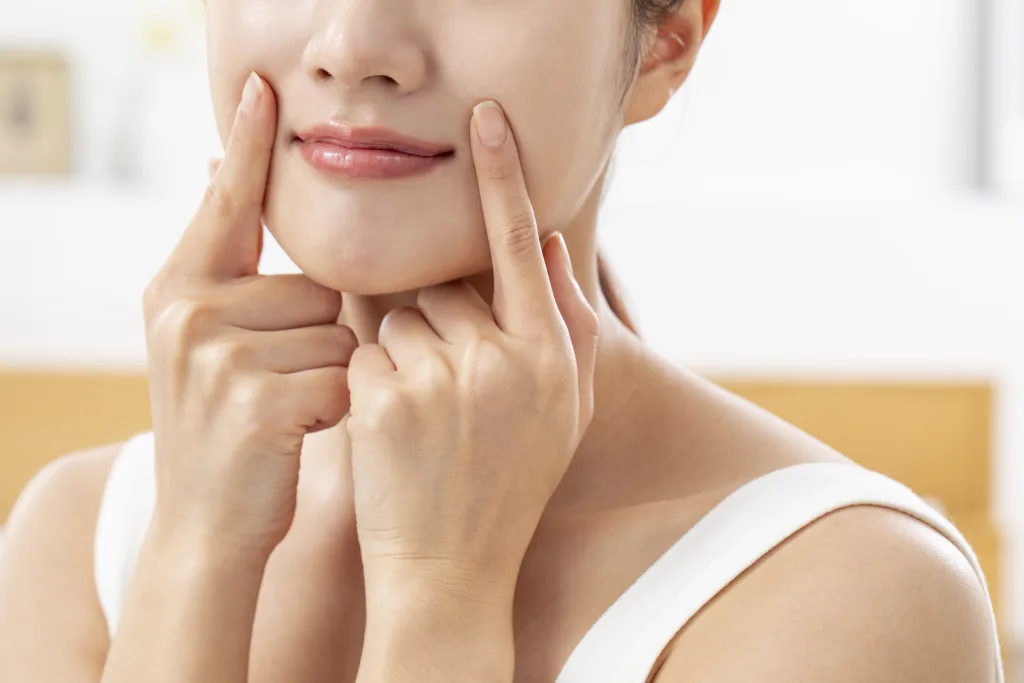
Can Sofwave completely get rid of nasolabial folds?
It is important to keep expectations realistic here.
Sofwave is a non-invasive treatment that improves skin elasticity and wrinkles, but it is difficult to consider it a procedure that completely erases already deep nasolabial folds.
Particularly when nasolabial folds appear not just as a skin issue, but alongside volume loss, midface structure, and sagging of deep tissues, Softwave alone may not produce the desired level of change.
In fact, the official clearance range of Sofwave is also focused on improving facial lines and wrinkles, and lifting sagging tissue on the eyebrows, submental area, and neck. The point is that it is not a treatment that directly replenishes lost facial volume.It is recommended to approach it with the knowledge of.
If you are considering Sofwave for smile lines
Rather, in a case like this, it is worth considering.
This is for cases where the skin around the nasolabial folds is naturally thin and fine wrinkles are noticeable, or when you feel that the skin elasticity around your cheeks and mouth has decreased compared to before.
At this time, rather than the concept of just getting rid of the smile lines, Improving both the elasticity and surface condition of the skin around the smile linesIt is more realistic to approach it by.
Conversely, if the nasolabial folds are deeply etched yet lack volume, or if cheek sagging is clearly present, it is better to compare other treatment methods together.
Recently, an approach that explains treatment methods by dividing the causes of smile lines into skin-based forms and volume-structural forms is also being used.
Is it okay if I don't see an immediate difference in my nasolabial folds after getting Sofwave?
This is also a frequently asked question during consultations.
Because Sofwave delivers thermal stimulation to the skin followed by ongoing skin remodeling over time, it is difficult to judge its effectiveness by looking at the face immediately after the procedure. VIVTONE's previous Sofwave column also explains that it is appropriate to observe changes in skin elasticity and wrinkles over several weeks to months following the procedure.
Actual nasolabial fold studies also evaluated changes at 1 month and 3 months. Therefore, rather than thinking immediately after the procedure, “My folds look just the same?” the process of comparing skin conditions again after an appropriate amount of timeThis is needed.
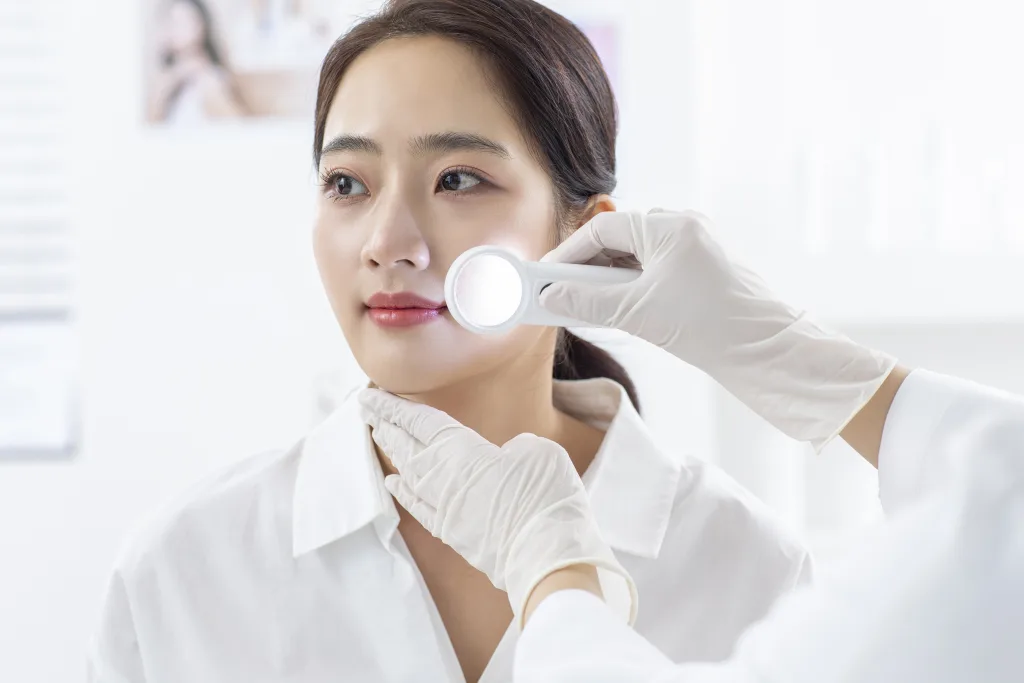
Which is better for nasolabial folds, Sofwave or Ultherapy?
I get this question a lot too.
Both use ultrasound, but they should not be considered equipment of the same method.
Sofwave delivers parallel-beam energy to the dermal layer centered around a depth of about 1.5mm, whereas micro-focused ultrasound devices like Ulthera form focal points at various depths. Therefore, rather than simply comparing which device is “stronger,” What caused the nasolabial folds to formIt is recommended to look at first.
If loss of skin elasticity and fine lines are the main concerns, Sofwave, which targets the dermal layer, can be considered. If deeper tissue sagging is the primary issue, other lifting approaches can be reviewed together.
VIVTONE's previous column explains the depth of action and the differences between Sofwave and Ulthera in detail, so reading it alongside this one will help you understand how to choose a treatment.
→ Is Sofwave Right for My Skin?
For nasolabial folds, you need to look at ‘why they formed‘ before looking at their 'depth'
If you decide on a procedure just by checking the depth of the wrinkles because you are worried about smile lines, you may end up with disappointing results.
Even for people in their 30s, the approach can differ because nasolabial folds driven mainly by reduced skin elasticity, sagging cheeks, or volume changes require different treatments.
Softwave is Equipment aimed at improving dermal elasticity and wrinklesTherefore, if changes in the skin itself are largely responsible for nasolabial folds, it can be a good option. Conversely, if deep structural changes are the main cause, a comparison with other treatments is necessary.
So if you are worried about smile lines, rather than asking “Is Sofwave effective for smile lines?”
“Whether my nasolabial folds are caused by skin elasticity, or if sagging or volume changes play a bigger role”It is recommended to check first.
If you expect results for nasolabial folds from Sofwave, what ultimately matters more than the name of the procedure is what caused my smile lines and which areas of the skin need to be improvedis to accurately distinguish between them.