When looking into Ultherapy Prime in Gangnam, there are endless things you might wonder about.
You end up searching for each thing one by one, from whether 300 shots are enough or if you need to go up to 600 shots, to how much pain to expect, whether there is a possibility of sunken cheeks, and if it is effective for a double chin.
However, the more information you look for, the harder it sometimes becomes to make a decision.
“So, how should I get it done for my face?”
Ultherapy Prime is not a device where the treatment method is determined solely by the number of shots. The depth of application and treatment range can vary depending on the thickness of the facial skin and tissue condition, the location of sagging, and the facial volume.
Ultherapy Prime allows for procedures to be performed while viewing subdermal structures in real-time using ultrasound imaging, and it can utilize 1.5mm, 3.0mm, and 4.5mm depth transducers.
So in this post, we will organize the questions that beginners considering Ultherapy frequently ask during actual consultations into a single, cohesive flow.
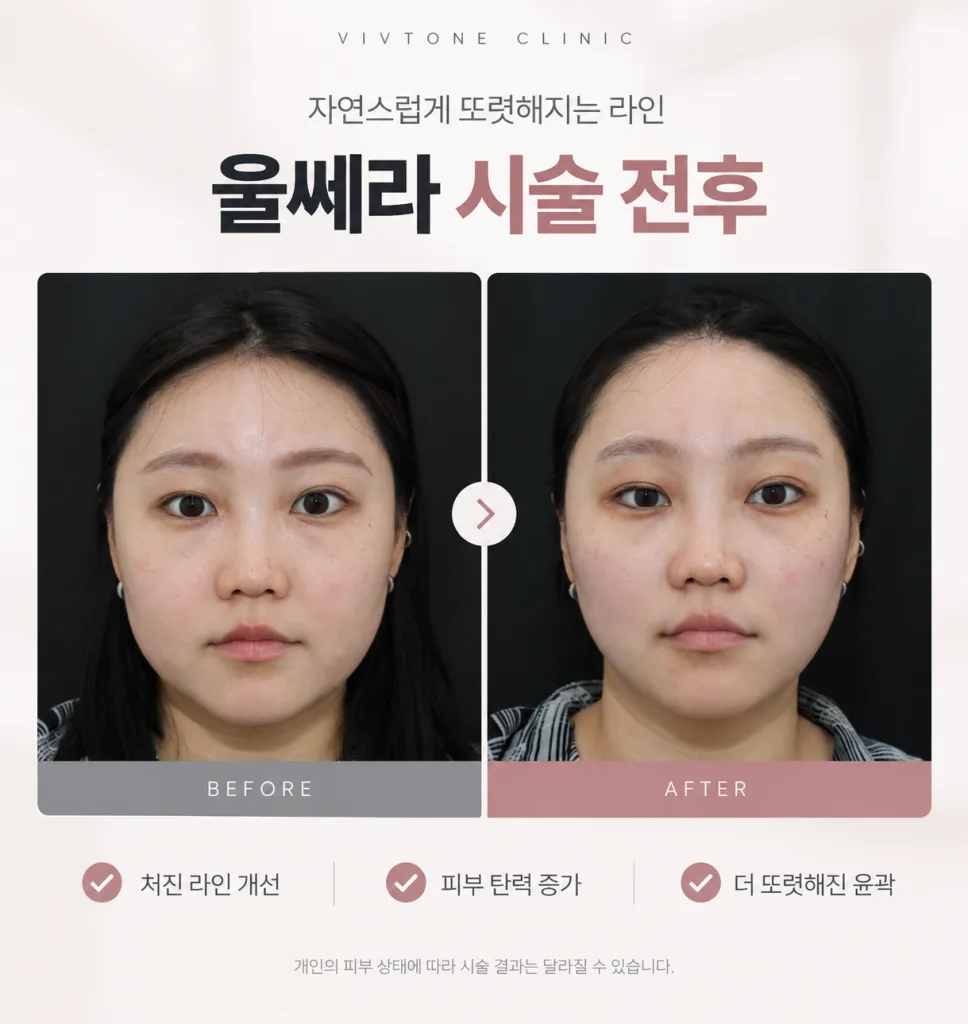
Are there specific faces that need Ultherapy?
“I feel like my face is sagging, so I'm thinking of getting Ultherapy.”
This is how counseling often begins.
However, just the feeling that your face looks sagging makes it difficult to immediately decide what treatment is needed.
Some people are most bothered by a blurred jawline, while others are worried about sagging cheeks that deepen their nasolabial folds. There are also cases where the skin becomes thinner and overall elasticity decreases.
For example, if sagging along the jawline and under the chin is your main concern, you can focus on the lower face and submental area. If cheek sagging is noticeable, the tissues and volume of the midface need to be examined together.
Ultherapy PRIME is used for the non-surgical lifting of lax tissue of the brow, submental, and neck, and its lifting effect has also been evaluated in clinical studies targeting skin laxity of the face and neck.
So, in the consultation, rather than asking “Should I get Ulthera?” “Which part of my face is sagging the most right now?”It is helpful to ask that way.
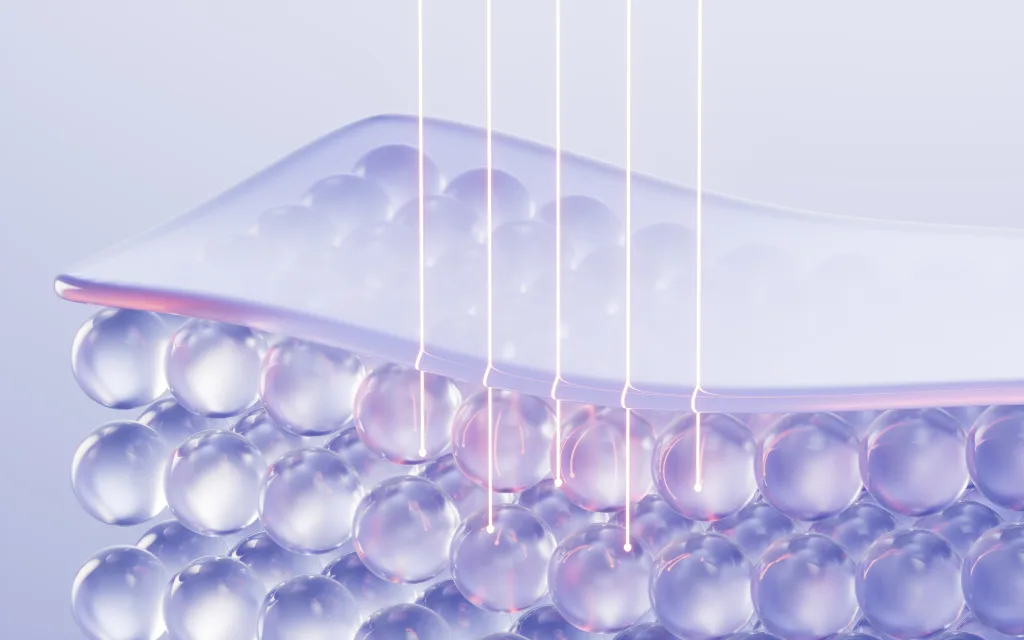
Why do even the same Ultherapy procedures have different depths?
When searching for Ultherapy Prime, you can easily see the numbers 1.5mm, 3.0mm, and 4.5mm.
This does not simply mean three options.
Ultherapy Prime features transducers that can target the 1.5mm dermis layer, the 3.0mm deep dermis layer, and the 4.5mm SMAS/fascia layer. It is also designed to allow treatment placement while viewing tissue images through DeepSEE.
Since people have different skin and subcutaneous tissue thicknesses, applying the exact same depth to the entire face is also inappropriate.
For example, it is difficult to approach areas with thin skin and areas with thick tissue, such as under the chin, in the same way.
So, in an Ultherapy consultation, a question just as important as “How many shots?” is “At what depth do you treat?”is the reason why.
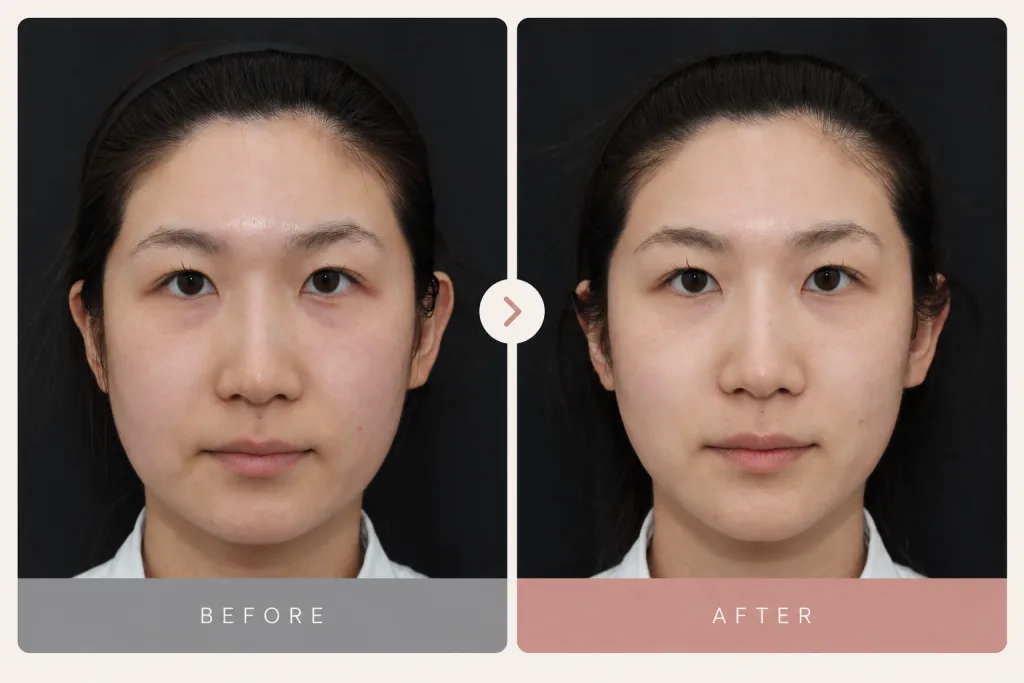
Between 300 shots and 600 shots, getting the higher number is not necessarily better.
When looking into Ultherapy, the first thing people compare is the number of shots.
300 shots seems like it might not be enough, and 600 shots might make you feel like you're getting the proper treatment.
However, a higher number of shots does not proportionally increase the results.
You can concentrate 300 shots on specific areas like the jawline or under the chin, or distribute them across various parts of the face. Similarly, the details for 600 shots will vary depending on how the entire face is divided for the treatment.
Therefore, the number of shots is The number that follows after determining the treatment area needed for the faceIt is easier to understand if you think of it that way.
If you are curious about the shot count itself, you can check the details on the difference between 300 and 600 shots in a separate post.
→ Ultherapy 300 shots vs. 600 shots: How many should you get?
Does Ultherapy work better the more it hurts?
Because Ultherapy delivers ultrasound energy deep into the skin, you may feel a stinging or hot sensation, or experience temporary pain during the procedure.
However, the degree of sensation varies from person to person. Differences also occur depending on the treatment area, energy settings, and tissue condition.
Even official safety data indicates that redness, swelling, and pain can be reported after the procedure.
So there is no need to think, “It hurt a lot, so the effect will be better.”.
If you are worried about pain, it helps to be informed in advance about which area is being treated, what depth of tip is being used, and what kind of sensation to expect during the procedure.
→ Ultherapy Prime pain, how much does it hurt?
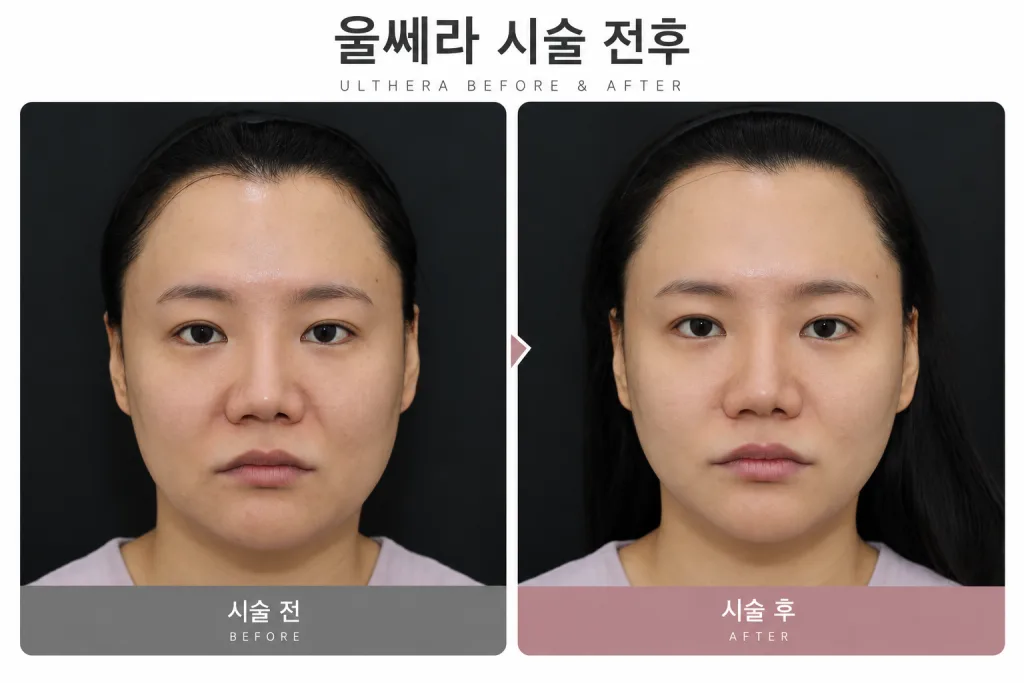
Areas you need to look at more carefully if you have little facial fat
“I don't have much cheek fat, would it still be okay for me to get Ultherapy?”
Questions like this also come up frequently.
If you do not have much fat on your face, rather than simply approaching it by pulling all the sagging skin, Distinguishing between the areas that need lifting and the areas where facial volume should be maintainedThis is good.
Especially areas that create facial dimension, such as the front cheeks or under the cheekbones, can change your impression with even a slight change.
Therefore, rather than thinking simply in terms of “fewer shots should be done” if someone has little facial fat, a process of checking the overall balance of the face is necessary.
If you are worried that your cheeks look sunken after an Ulthera procedure, our previous column covered in detail what specific aspects you actually need to look out for.
→ Ultherapy Cheek Hollows, What to Do If Your Cheeks Look Hollow After the Procedure
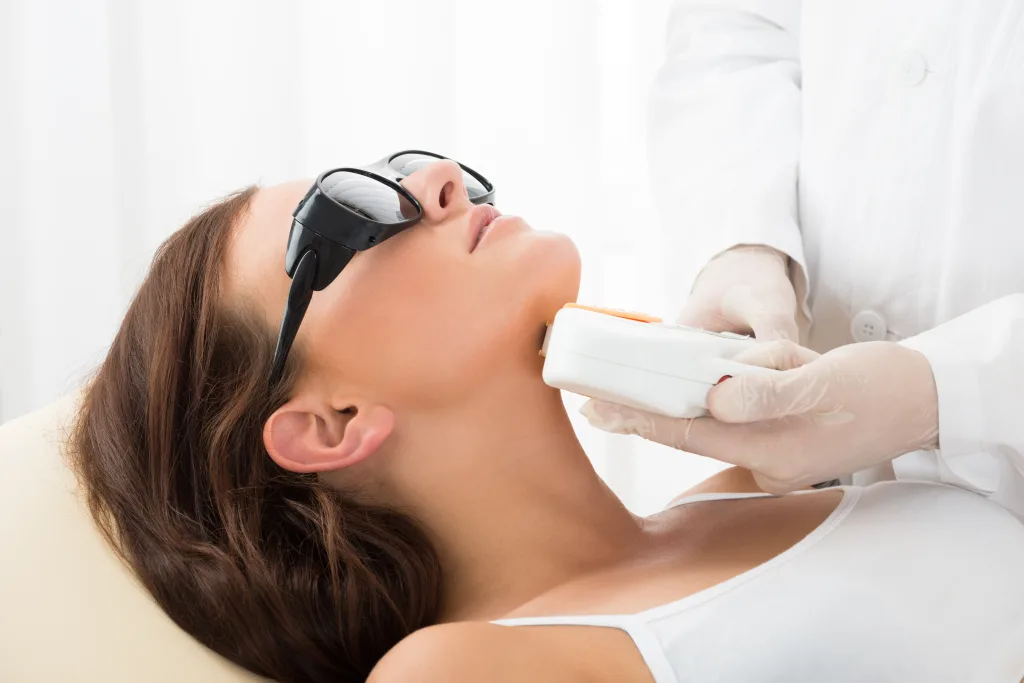
A double chin may not be just a matter of submental fat
Many people look into Ultherapy because their under-chin area looks thick.
However, a double chin is not solely caused by excess fat. There are also cases where the boundary between the jaw and neck becomes blurred as the skin and tissues sag, and sometimes both factors occur together.
Ultherapy is a device used to lift lax tissue under the chin and neck, and clinical studies have actually confirmed the improvement of skin laxity in the lower face and submental area.
Conversely, if there is a lot of submental fat, it is difficult to expect a significant reduction in the fat itself with lifting alone.
So if you're worried about your double chin, rather than asking “Can Ultherapy get rid of chin fat?” “Is my double chin caused by a lot of fat, or is it severe sagging?”It is more accurate to check from.
→ Is Gangnam Ultherapy effective for a double chin as well?
If you are looking into Ultherapy because of smile lines
Nasolabial folds also do not have just one cause.
While there are cases where lines are left due to decreased skin elasticity, there are also cases where shadows deepen as the cheeks sag downward.
Even if they look like the exact same smile lines on the outside, if the causes are different, the approach can also be different.
So rather than choosing equipment based on just nasolabial folds, considering cheek sagging, skin elasticity, and facial volume togetherThis is needed.
If you are curious about the differences between Sofwave and Ultherapy, you can also check out this comparison column.
→ Sofwave vs. Ultherapy, both are lifting treatments, but which one is right for my face?

Why you need to look at a few months after the procedure rather than the day of
Ultherapy is not a procedure where the results are completed the moment the treatment ends.
Ultrasound energy is delivered to the target depth, followed by a process of tissue recovery and remodeling, during which changes in collagen and elastic structures occur. Manufacturer data also explain that a gradual lifting effect appears over time as a result of this remodeling process.
In clinical studies, results were also evaluated at regular intervals, such as 90 and 180 days post-procedure. One study confirmed improvements in skin laxity of the face and neck at the 90- and 180-day marks.
Therefore, rather than looking in the mirror the day after the procedure and judging whether it was effective, it is better to take a “before” photo and check how things change over time under the same lighting and angle.
→ When do Ultherapy results start to become visible?
If a month has passed and nothing has changed much
At this point, there is no need to think that you lacked shots first.
It is a good idea to look back at what kind of changes we aimed for from the beginning.
Sometimes, the change in facial volume is greater than the skin sagging, and the change you originally expected might have been different from the area Ultherapy mainly deals with.
It may also be too early to evaluate the results. In studies related to Ultherapy, primary evaluations were conducted at time points such as 90 and 180 days.
Rather than rushing into additional procedures based solely on how your face looks at the one-month mark Comparing the initially diagnosed problem with the changes appearing nowThis is good.
When comparing it to Sofwave, do not look for a ‘stronger device'
People often compare Sofwave and Ultherapy by first asking which one is stronger.
However, in medical practice, before this Which floor needs to be treatedSee.
Ultherapy Prime can treat the dermis and deeper tissues by utilizing various depths of 1.5mm, 3.0mm, and 4.5mm.
Therefore, there is no need to compare cases where tissue sagging and contour changes are the primary concern with cases where skin elasticity itself and fine wrinkles are the primary concern using the same criteria.
If you are curious about the difference between the two procedures, you can check their mechanisms of action and suitable concerns together in our previous comparison column.
→ Sofwave vs. Ultherapy, both are lifting treatments, but which one is right for my face?

Questions to ask when consulting for Ulthera Prime in Gangnam
It is natural to compare prices or the number of shots first.
However, to compare actual treatment plans, it is better to ask a few more questions.
Which part of my face is the most sagging?
What depth of treatment is needed?
Are there any areas where the volume should be kept as is?
If it's 300 shots, which areas are targeted?
When should I check the results again?
Asking a question like this helps you understand much more specifically what kind of treatment you will receive, rather than simply comparing “300 shots or 600 shots.”.
Ultherapy Prime is a device designed to allow the selection of treatment depth while visualizing the subcutaneous tissue through DeepSEE, so planning that considers individual anatomical differences is important.
Ultherapy Prime, read what you are curious about first.
If you are looking into Ultherapy for the first time, you don't need to force yourself to read everything in a single post.
If you are worried about pain
Ultherapy Prime pain
If you are curious about the 300-shot and 600-shot
→ Ultherapy 300 shots and 600 shots
If you are wondering when the effects will appear
When do Ultherapy effects start?
If you are worried about your cheeks sinking in
Ultherapy cheek hollows
If you are worried about a double chin
Gangnam Ultherapy double chin
If you want to compare it with Sofwave
→ Sofwave vs. Ultherapy
Why you shouldn't look only at the number of shots when deciding on Ultherapy
When you look into Ultherapy, you naturally become interested in the numbers.
Things like whether it's 300 shots or 600 shots, 1.5mm or 4.5mm, and how many months it lasts.
However, a face cannot be determined by numbers alone.
Even with the same 300 shots, the treatment area varies depending on the body part, and the required depth also differs based on the skin thickness and tissue condition of the face. Ultherapy Prime is equipped with transducers of various depths and real-time imaging capabilities precisely to account for these differences.
So when you consult
How much I will receivesee
What to change and what to keep as is
It is a good idea to talk about that first.
Ulthera is not a treatment applied in the same way to every face, Lifting that determines the treatment scope based on the current facial sagging and tissue conditionIt is close to.
* The suitability of Ultherapy Prime, treatment depth and range, number of shots, and whether to have additional procedures may vary depending on the skin and tissue condition. It is recommended that a specific treatment plan be determined after a consultation with a medical professional.
Written and medically reviewed by medical staff
Written and medically reviewed by Dr. Kang Min-cheol
Last update | Sep. 18, 2026